

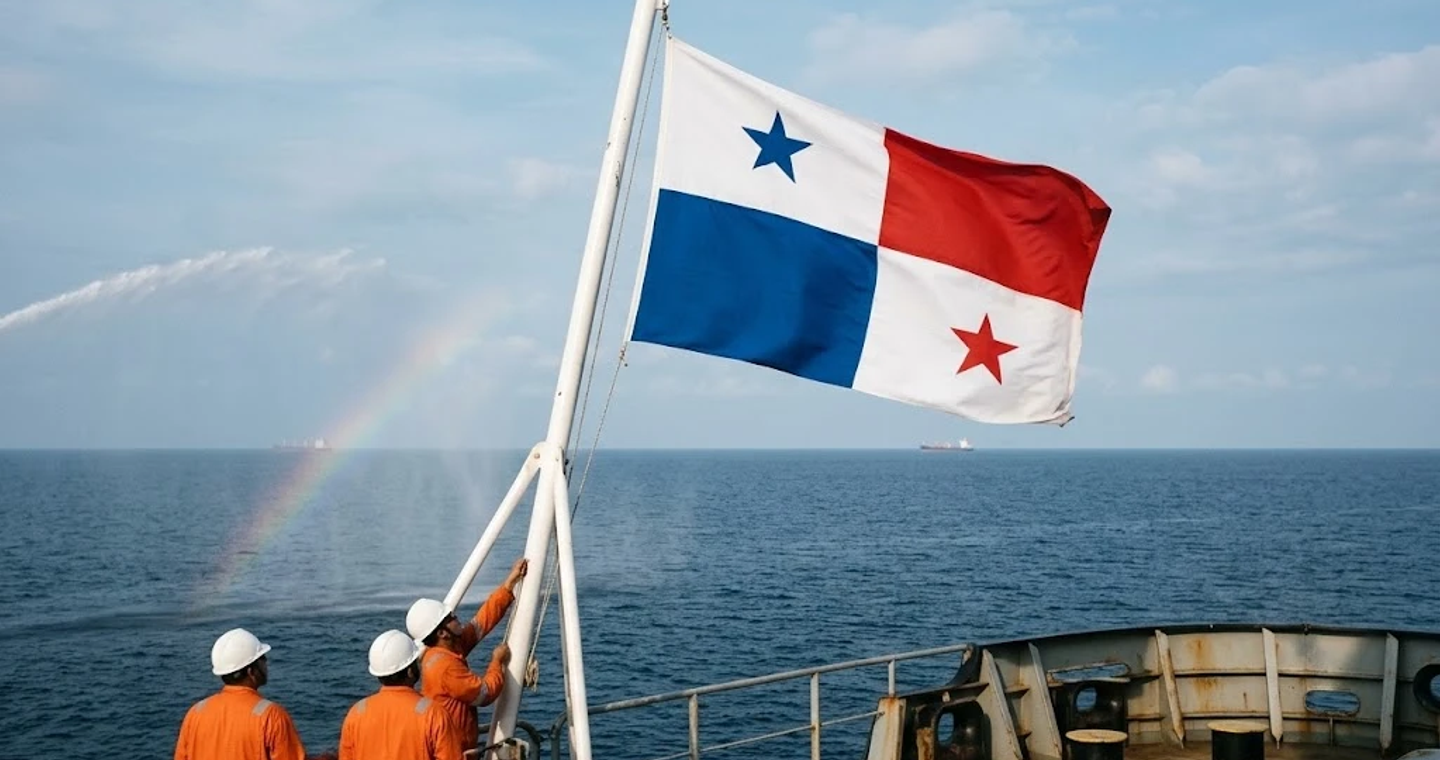
Most owners start the flag conversation with a single question: which registry is cheapest? It is a fair question, but it is rarely the one that decides whether a flag works for a particular ship. The flag shapes how often the ship is inspected and where, whether your lender will take a mortgage on it, how your crew's certificates get endorsed and who answers the phone when a port state control officer raises a problem. This article sets out what to weigh before ship flag registration, and how to rank those points for your own vessel.
What the flag actually controls
A ship flies the flag of the state whose registry it is entered in, and it is bound by that state's rules. The flag state issues or authorises the statutory certificates, usually through recognised organisations (ROs), sets the minimum safe manning, endorses seafarers' certificates and is the authority of record when something goes wrong.
Open registries such as Panama, Liberia, Palau, Saint Kitts and Nevis, Comoros, Guinea-Bissau, Sierra Leone and Belize accept ships whose owners are not nationals of that state. That gives you choice. It does not mean the choices are interchangeable.
Eight things to weigh
Port state control record
Port state control regimes such as the Paris MoU and the Tokyo MoU publish yearly white, grey and black lists of flags based on inspection and detention results. Where your flag sits feeds into the ship's risk profile and, through it, into how often the ship is boarded.
The lists are recalculated every year, so a flag's position can move. Look at the latest published list and at the direction of travel over the past few years, not at a single snapshot. Our article on the Paris MoU lists explains how they are calculated and what they mean for your ship.
Age and ship type
Registries treat older tonnage differently. Some will not take a ship above a certain age at first registration; others accept it subject to additional surveys or documents. Rules can also differ for tankers, bulk carriers, passenger ships and yachts. If your ship is older, check each candidate's age policy before anything else.
Trading area
Northern European ports, the Mediterranean and Black Sea, the Asia-Pacific region and US waters each have their own port state control regime and their own view of flags. A flag that draws little attention in one region can mean more frequent inspections in another. Some charterers and terminals also state flag preferences in their vetting requirements.
Lender requirements
In a financed purchase, the bank usually has the final word. Lenders accept registries where they can register a mortgage and enforce it with confidence, and many keep a list of acceptable flags. Ask for that list early. Remember too that a mortgaged ship cannot normally change flag without the mortgagee's consent.
Class society
The flag authorises specific classification societies to issue certificates on its behalf. If your ship's class is not among them, you either change class or look at a different flag. The class society's own port state control record also counts towards the ship's risk profile.
Total cost
Cost is several lines, not one: the initial registration fee, annual tonnage tax, certificate fees, call sign and radio licence charges, and the cost of notarising or apostilling documents. Fees vary by flag, tonnage and year, so compare current tariffs for your ship rather than relying on general rankings.
Crew endorsements
Every officer's certificate of competency needs a flag state endorsement under STCW. With a multinational crew, the way a registry handles endorsement applications makes a real difference to day-to-day operations.
How the administration works
Some registries work through a consular network, some take most applications online, some operate through regional offices. When a ship is detained on a Friday evening or needs an urgent certificate extension, how the administration responds matters as much as the registration itself.
Ranking the criteria for your ship
There is no universally right flag. The weight of each point depends on the vessel and the trade.
- A relatively young ship trading to Europe: the port state control record comes first, and charterers will often expect it.
- An older ship in regional trade: age rules and total cost may decide it, but check the regional flag list before you commit.
- A financed acquisition: start with the lender's list of acceptable registries and work within it.
- A ship going on bareboat charter: both the underlying registry and the bareboat registry must allow the arrangement, and any mortgagee must consent.
Questions to put to each candidate flag
When you line up the options, get a current, written answer to each of these:
- Where does the flag stand on the latest Paris MoU and Tokyo MoU lists, and which way has it moved?
- Will the ship's age or type cause problems at first registration? Are extra surveys needed?
- Is the ship's class society authorised by this flag?
- Does the lender accept this registry, and how is the mortgage registered?
- What do registration and the annual charges add up to?
- Which documents are required, and which need notarisation or an apostille?
- How are crew endorsement applications handled?
How a change of flag runs
Once the flag is chosen, the sequence is broadly the same. The document checklist is prepared and the application filed. When the provisional certificate of registry is issued, the ship can trade under the new flag. The Deletion Certificate is obtained from the previous registry and the Continuous Synopsis Record (CSR) is updated. Permanent registration follows once the original documents reach the administration. What each step requires depends on the flag, so ask how the process works as part of the comparison.
Talk to us about flag registration
Since 2014 our Istanbul team has worked on more than 250 ships for over 50 clients. Through our Flag Registration service we handle registration and change of flag under Panama, Palau, Liberia, Saint Kitts and Nevis, Comoros, Guinea-Bissau, Sierra Leone and Belize. Send us the ship's type, age, trading area and financing position, and we will compare the suitable options among those eight flags against the points above.